Sprinkler Valve Repair & Replacement
We repair and replace irrigation valves throughout the Phoenix metro. Valves are the electrically actuated part of your system that turns the water on and off, and most valve problems are repairs — not replacements. We’ll tell you which yours needs.
What a valve does, and why it's plastic
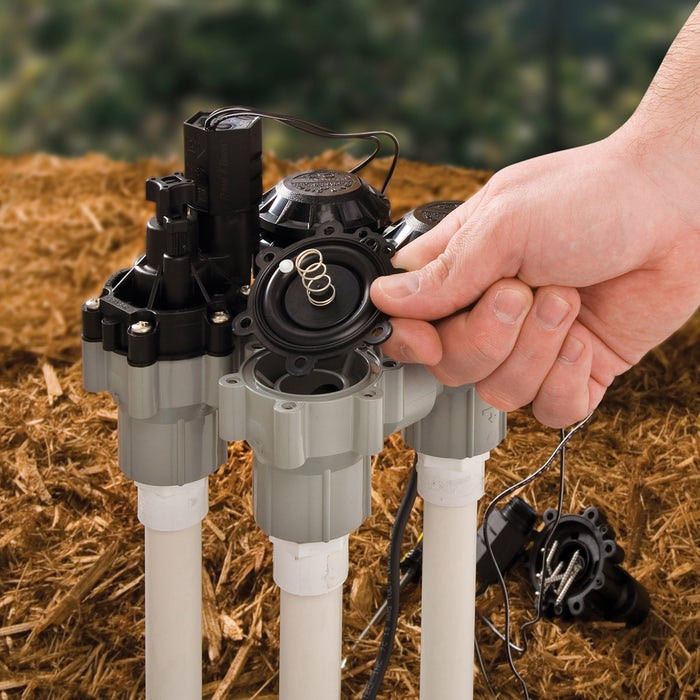
Like the parts on a car, the components inside a valve wear out over time and can be replaced to get it working like new. The two main parts are:
- The solenoid — the electrical component your timer controls.
- The diaphragm — holds the water back when the valve is off and opens to let it flow when the valve
is on.
Irrigation valves are made of plastic for good reason: it’s inexpensive, it resists rust and corrosion, and it
flexes to absorb pressure and movement. The valve is one of the most important components in your
system.
The two types of valves
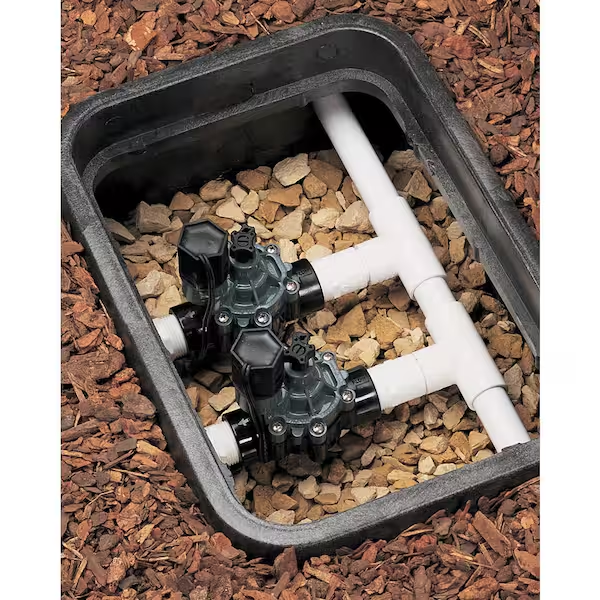
- In-line valves. Water flows straight through, one side to the other (in-line). They’re installed below grade in a plastic valve box, which protects them from being stepped on or kicked and from direct sun — so they last the longest in Arizona. In-line valves must be fed from a water source that has a backflow prevention device installed.
- Anti-siphon valves. These sit above ground and should be installed 12 inches above the highest sprinkler head in the yard (homes with large elevation changes, close to the mountains, may need valves mounted above head height). Installed correctly, they don’t require a separate backflow device because they create their own. Because we often see them exposed to the sun, they generally don’t last as long as in-line valves.